Can You Wear a Mask on OnlyFans? 2026 Rules + What Masked Creators Use
Yes — you can wear a mask on OnlyFans. The platform's rules allow masks, hoods, and any face covering in all published content. The one place a mask is not allowed is identity verification: to enable payouts, OnlyFans requires a clear, unmasked selfie that matches your government ID. After that, you can stay masked in every post, forever.
For most creators asking this question, the mask isn't a costume choice — it's job security. The most common reason creators hide their face is the risk of content resurfacing in front of an employer, a client, or family. Masks are the most battle-tested answer to that risk: in Pseudoface's analysis of 250,000+ public Reddit threads from real creators, masks are the single most-used face-hiding method, ahead of cropping and blur.
This guide covers the 2026 rules, how masked creators actually film, what they wear and where they buy it, what the earnings data says, and when an AI face beats a physical mask.
Is wearing a mask against OnlyFans rules?
No. OnlyFans' Terms of Service place no restriction on face coverings in content. Masks, masquerade designs, balaclavas, cosplay hoods, and full-face coverings are all allowed in photos, videos, streams, and profile media. You are never required to show your face in published content.
The rule that trips up new faceless creators is verification, not content. Every creator must pass OnlyFans' KYC (Know Your Customer) check before earning: a photo of a government-issued ID plus a matching, unmasked selfie. No mask, heavy makeup, or digital filter is accepted in those images — this is a financial-compliance requirement, not a content policy. Attempting to sneak a partial covering into verification photos reliably ends in rejection.
Verification failures are common enough that they're worth planning around. Here's what creators report actually goes wrong:
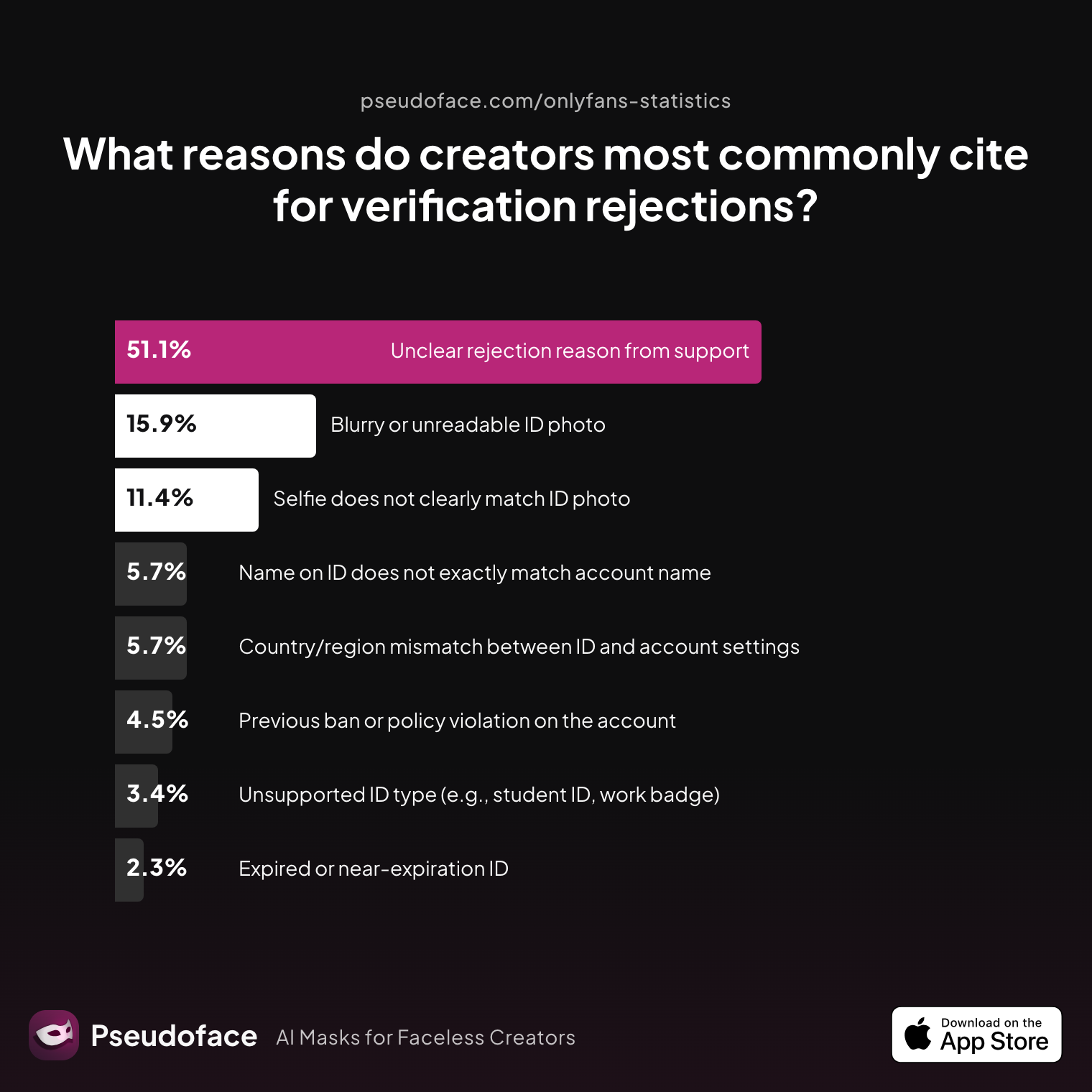
Over half of rejected creators never learn the exact reason, but among the known causes, blurry ID photos and a selfie that doesn't clearly match the ID top the list. The takeaway: do verification cleanly and unmasked once, and the platform never needs to see your face again.
One boundary to know: your verification photos are held by OnlyFans for compliance, so your legal identity is known to the platform (and its payment partners) even if subscribers never see it. If your goal is staying anonymous to your audience, masks fully deliver. Complete anonymity also depends on your account setup — stage name, payout details, metadata — which we cover in the guide to staying anonymous on OnlyFans.
How do creators do OnlyFans with masks on?
Masked content is a workflow, not just an accessory. The creators who sustain it treat the mask as part of their production setup, and the community data shows it works: masks lead every other face-hiding technique in real-world use.
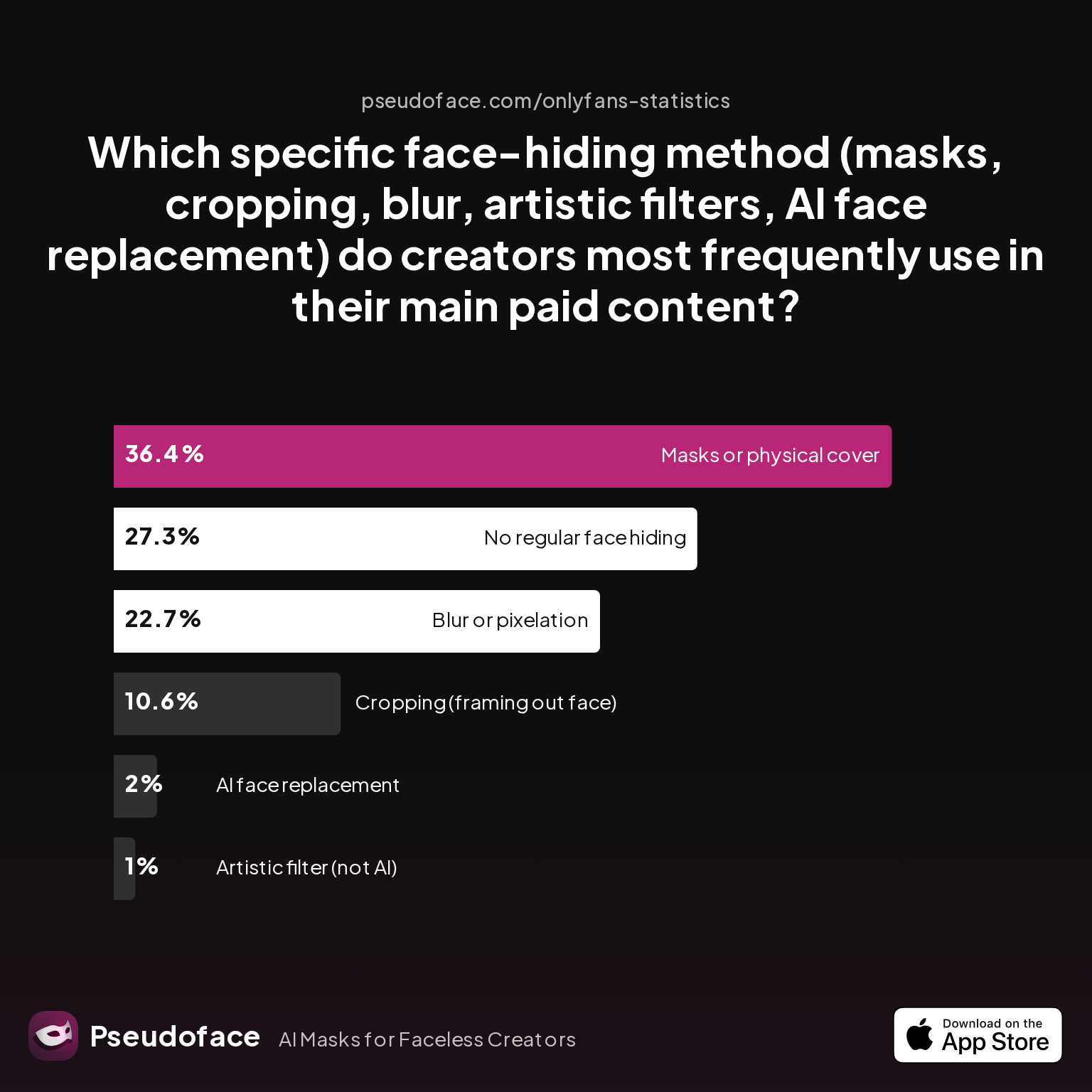
| Method | Share of creators |
|---|---|
| Masks or physical cover | 36% |
| No regular face hiding | 27% |
| Blur or pixelation | 23% |
| Cropping (framing out face) | 11% |
| AI face replacement | 2% |
| Artistic filter (not AI) | 1% |
36% of creators who hide their face use masks as their primary method — more than blur and cropping combined among active concealment techniques. And satisfaction tracks adoption: nearly 77% of creators report being somewhat or very satisfied with their face-hiding method's comfort and emotional safety, with mask users typically reporting higher confidence than creators relying on heavy cropping or editing.
The practical habits that make masked filming sustainable, straight from creator forums:
- Limit sessions in non-breathable masks. Silicone and latex look striking but build heat — experienced creators shoot in 10–15 minute bursts and favor perforated, mesh, or partial-face designs for longer sessions.
- Fight lens fog. Anti-fog wipes or spray (borrowed from cosplay helmets) keep eye areas clear on camera.
- Fit before you film. Adjustable straps, soft liners, and a short test shoot before any paid session. Comfort can't be faked for 20 minutes straight.
- Use the mask in the tease. Pulled halfway, played with, removed without a face reveal — anticipation is part of the masked brand.
- Keep hair and makeup integrated. Water-resistant makeup and hair secured behind the mask keep the look consistent through a full shoot.
While ski masks can easily kill the mood, some of the fancier leather/plastic ones for Masquerade parties can still do a pretty good job of making you just difficult enough to distinguish. Personally, I think blurring faces hurts the mood of the photo/video more than those kinds of masks. —u/YoMiner, r/onlyfansadvice, https://www.reddit.com/r/onlyfansadvice/comments/18937n2/video_editor/kbpunm5/
What masks do OnlyFans creators actually wear?
Searching "masks for OnlyFans" mostly surfaces Amazon and Etsy product listings — which tells you where creators shop, but not what works on camera. The styles that come up again and again in creator communities:
- Masquerade and Venetian masks — elegant partial coverage that keeps the eyes and mouth expressive. The most-recommended starting point.
- Animal masks (bunny, cat, fox) — cheap, easy to source, visually soft, and hard to identify through.
- Cosplay and character masks — anime, villain, and mascot styles that come with a built-in niche audience.
- Latex, leather, and fetish designs — strong aesthetic signal for kink-adjacent content; less breathable, so budget for breaks.
Halloween just ended so theres a BUNCH of mask costumes on sale right now, pretty much endless possibilities, cute things like bunny, cat, fox (I did a bunny one) that and you can make content cosplaying as any masked characters you like! —u/Alicyn_sin, r/onlyfansadvice, https://www.reddit.com/r/onlyfansadvice/comments/1gz6iuo/content_ideas_for_a_faceless_creator/lytzzrq/
Sourcing follows the same pattern the SERP hints at: Amazon for budget options, Etsy for handcrafted signature pieces, cosplay suppliers for character accuracy, and post-Halloween sales for stocking up. Veterans keep 2–3 core masks — a main, a backup, and a seasonal variant — so the persona stays recognizable without going stale. For a deeper comparison of specific styles and materials, see our guide to the best masks for OnlyFans creators.
The mask itself is only half the brand. Consistency is what turns a face covering into an identity — most successful masked creators stick to one signature look and build their visual world around it, which we break down in building a brand identity around your mask. And the leaks that actually expose masked creators almost never come from the mask slipping — they come from account setup:
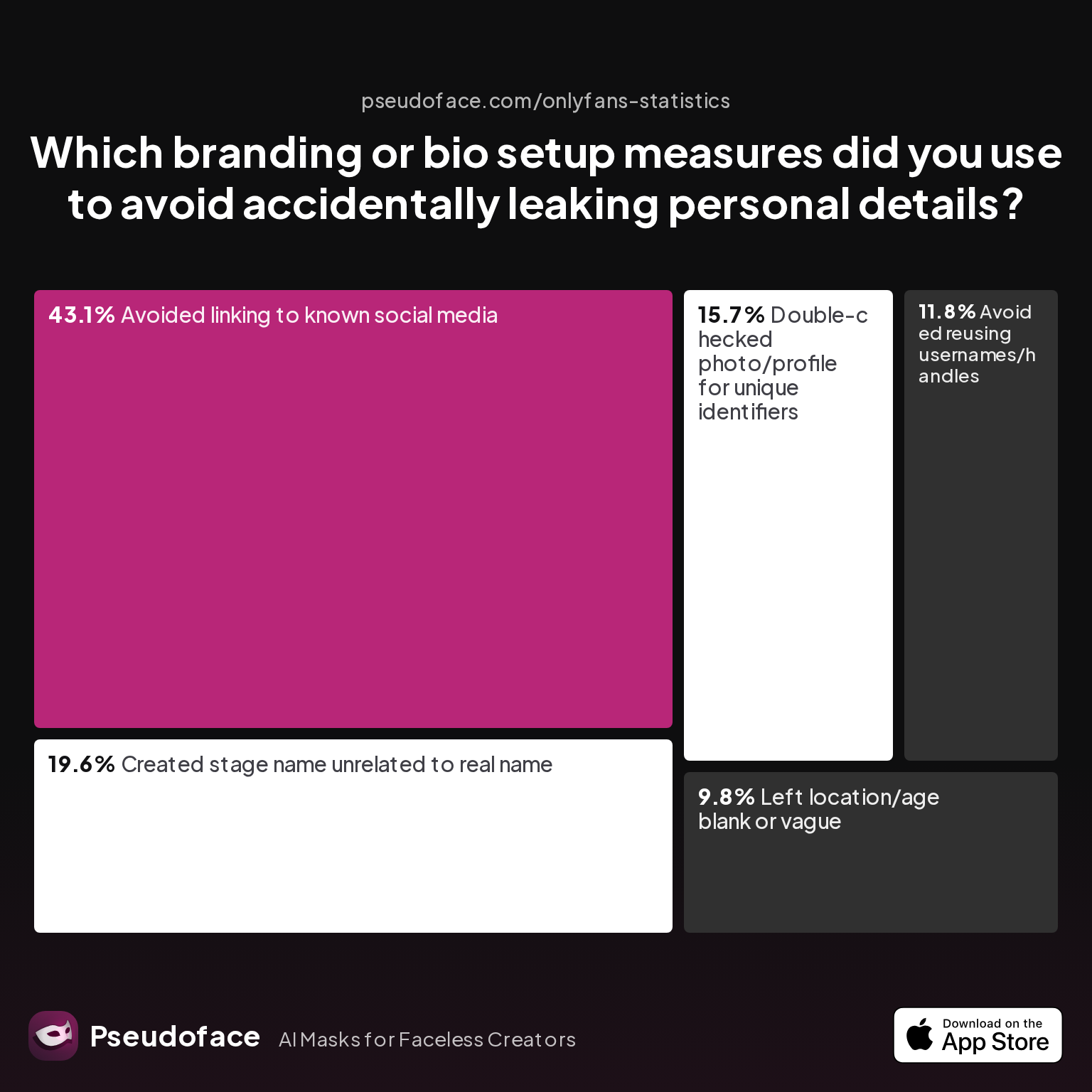
43% of faceless creators avoid linking any known social media, and one in five run a stage name with zero connection to their real one. Reused usernames, photo metadata, and casual bio details out you faster than any mask failure will.
Do masked OnlyFans creators make less money?
Less often than the myth suggests. Here's how anonymous creators describe the earnings impact of never showing their face:
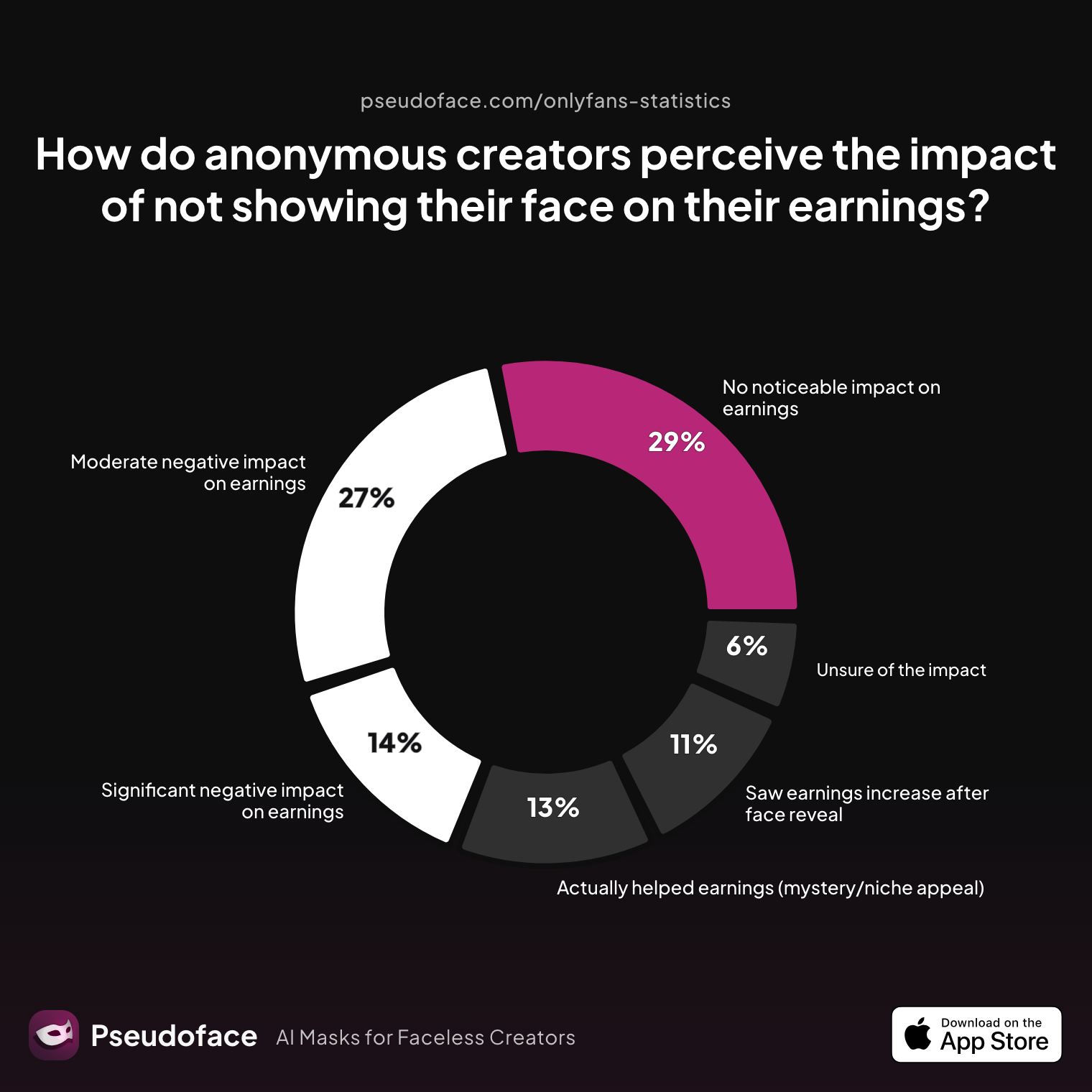
| Reported impact | Share |
|---|---|
| No noticeable impact | 29% |
| Moderate negative impact | 27% |
| Significant negative impact | 14% |
| Actually helped earnings (mystery/niche appeal) | 13% |
| Switched to showing face, earnings rose | 11% |
| Unsure | 6% |
29% report no earnings impact at all, and 13% say anonymity helped — the mystery becomes the niche. A meaningful minority do report losses, usually in audience segments that expect face-first "girlfriend experience" content. The pattern in the data: creators who treat the mask as a character earn; creators who treat it as a missing feature struggle.
In absolute terms, fully faceless creators span the whole earnings range — around 21% report over $10,000/month, while the most common bracket is $1,000–2,499:
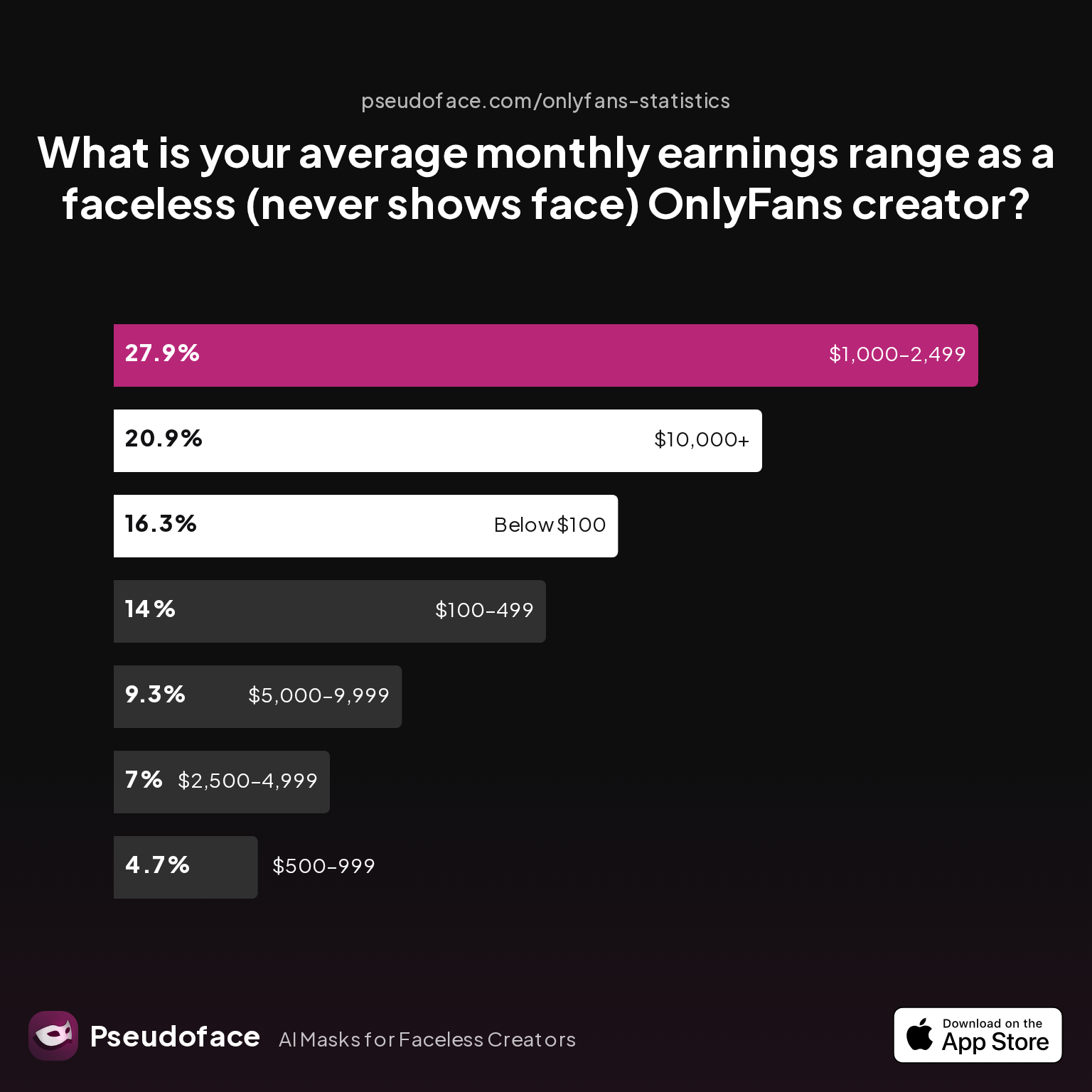
These are self-reported figures from public forums, so survivorship bias applies — but they kill the claim that hiding your face caps you at pocket money. The full breakdown of what drives faceless income is in our data guide to making money on OnlyFans without showing your face.
Masks vs. AI face replacement: which should you use?
The classic trade-off with masks is the reason 27% of creators still show their face: fans connect with faces. A mask protects you by removing exactly the thing that converts browsers into subscribers.
That trade-off is no longer fixed. AI face replacement gives your faceless account a face — just not yours. With an app like Pseudoface, the camera auto-blurs your face live as you shoot (or auto-crops to frame it out), and a consistent AI-generated face is applied to the video in processing. Your persona gets a face that smiles, talks, and emotes; your real face never appears in anything you publish.
How the options compare for the risks that matter:
- A mask physically blocks your face. It can't slip off in software because there's no software — but your content loses facial expression, and some niches convert worse without a face.
- Blur and filters are the weakest link: blur can be reversed or bypassed if the raw file leaks, and beauty-filter-style effects can drop mid-frame. That's the failure mode privacy-conscious communities warn about most.
- AI face replacement keeps expressions and connection. The AI face is baked into the video in processing — the file fans receive contains no blur overlay to reverse and no filter that can slip mid-frame.
The honest answer for many creators is a mix: masks for shoots where physical coverage is the aesthetic, an AI face for content where expressions sell. If you're weighing all the techniques side by side, our comparison of masks vs. cropping vs. blur covers the full trade-off matrix, and the broader question of whether you can be faceless on OnlyFans has a data-backed yes.
Frequently Asked Questions
Can you get verified on OnlyFans if you wear a mask?
No — verification requires a clear, unmasked selfie matching your government ID. OnlyFans' payment partners enforce strict KYC compliance, so the mask can only go on after you're approved. In published content, masks are fully allowed.
Do masked OnlyFans creators make less money?
Not necessarily. In 2025–2026 survey data, 29% of anonymous creators report no earnings impact and 13% say anonymity increased income through niche appeal. About 41% report some negative impact, concentrated in audiences that expect face-first content.
What masks work best for OnlyFans content?
Masquerade and animal masks are the most-recommended starting points: partial coverage, breathable, expressive, and cheap to source on Amazon or Etsy. Custom silicone, latex, or resin masks build a stronger signature look but need comfort testing before long shoots.
Is it hard to film content with a mask on?
There's an adjustment period. Heat, fogging, and fit are the common complaints; breathable designs, anti-fog wipes, mask liners, and shorter session blocks solve most of it. Most creators adapt within a few shoots.
How do masked creators avoid being identified?
The mask handles the camera; the account setup handles everything else. Use a stage name with no link to your real one, never cross-link personal social accounts, strip metadata from uploads, and keep location details vague — most real-world exposures come from setup mistakes, not mask slips.
Can you combine a mask with other face-hiding methods?
Yes, and many creators do — masks with strategic cropping, occasional blur for extra-sensitive content, or an AI face for expression-heavy videos. Keep the combinations consistent per content type so your brand stays recognizable.
Will fans subscribe if they never see your face?
Large audience segments happily subscribe to masked and faceless creators — mystery is a selling point in the right niche. Strong personas, consistent branding, and expressive content (voice, body language, or an AI face) close most of the gap that hiding your face creates.


14,683 masks used by 5,873 creators
Stop being faceless
Multiply your income and your fan base while keeping your identity safe


Which one would you subscribe to?